


After more than a year of disrupted global container flows, the Suez Canal may once again be on the path to becoming the world’s most important maritime shortcut.
While the canal was never formally closed, security concerns in the Red Sea forced most container carriers to reroute vessels around the Cape of Good Hope.
Now, with geopolitical conditions shifting and carriers reassessing risk, a gradual return to Suez is increasingly likely in 2026.
But more traffic through Suez doesn’t automatically mean smoother logistics. In fact, it may create new challenges – especially at ports.
Thorsten Diephaus
Global Head Container Freight Procurement
P: +49 40 3233550M: +49 173 701 8158
E: thorsten.diephaus@bertling.com
Why Is the Suez Canal So Important to International Shipping?
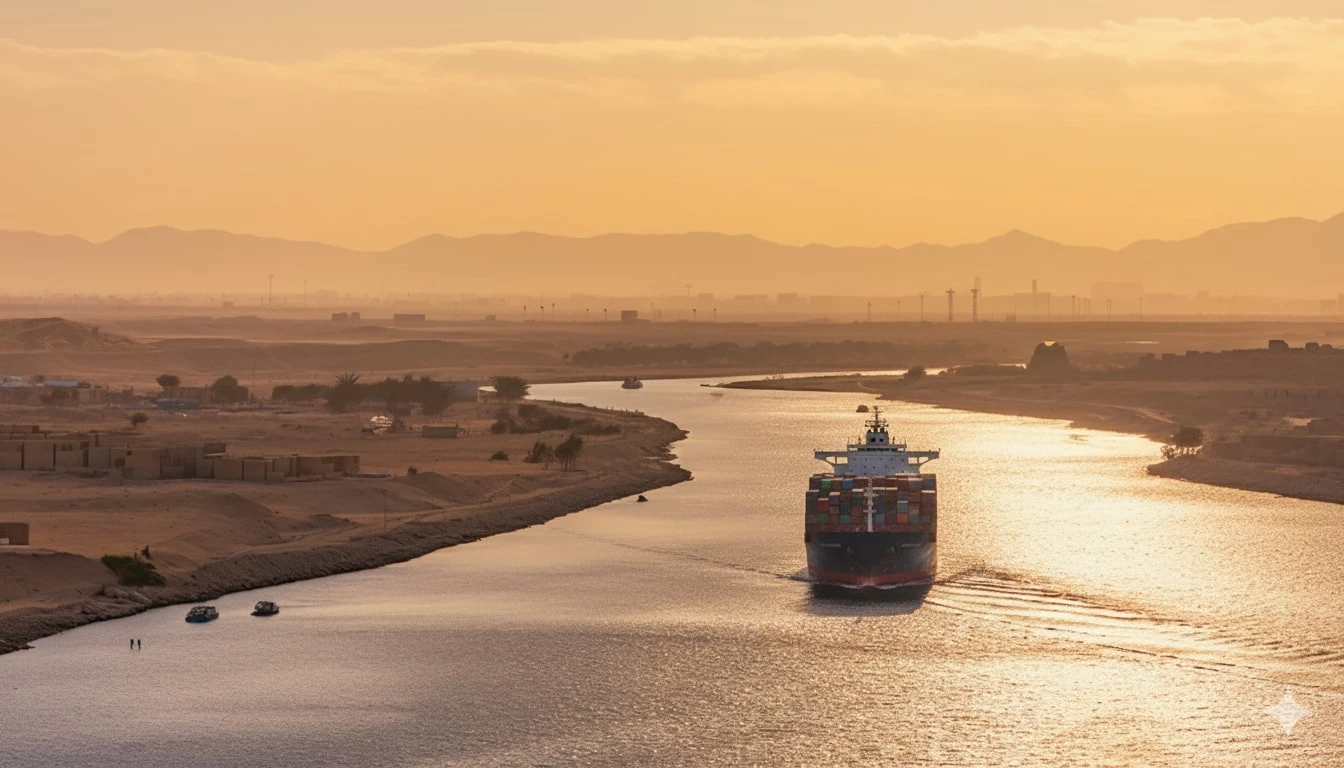
The Suez Canal is crucial to international shipping because it is the shortest sea route between Asia and Europe, directly connecting the Mediterranean Sea with the Red Sea. This makes it one of the most strategically important chokepoints in global trade.
Also read: What is global logistics and supply chain management?
Container Carriers Largely Bypassed the Suez Canal in 2024–2025
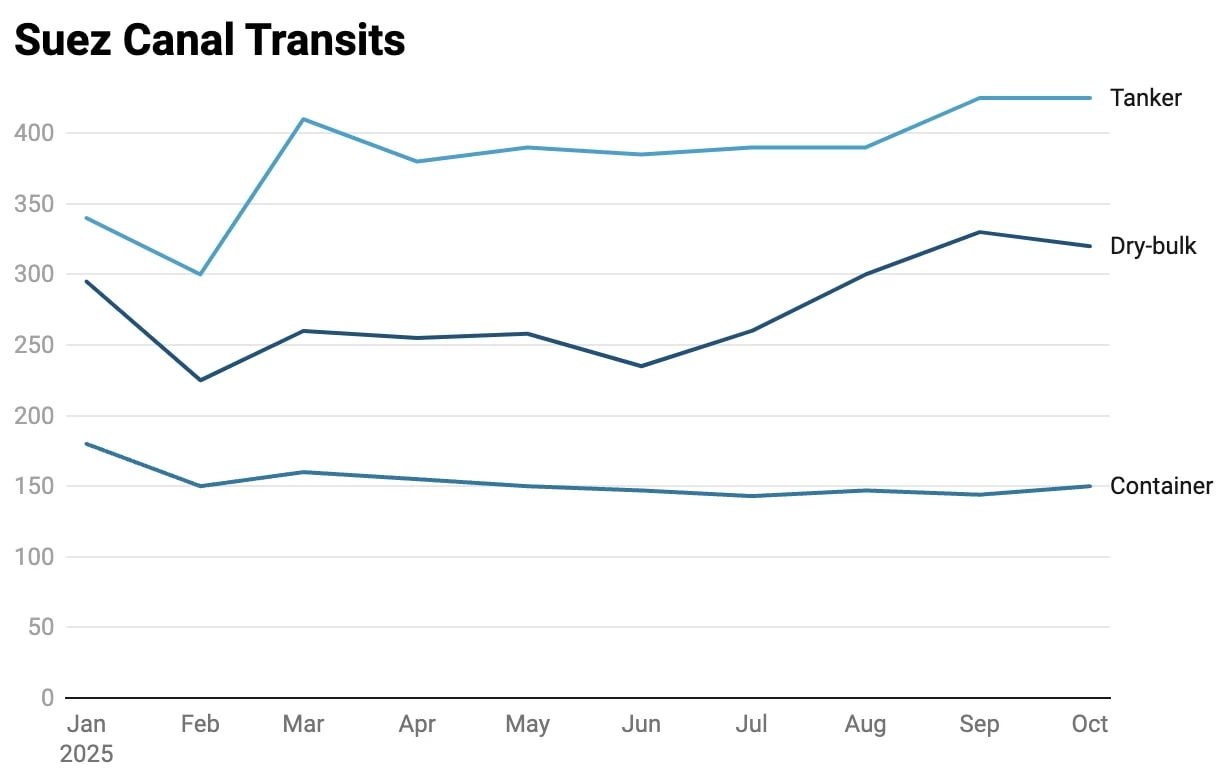
Following the war between Israel and Hamas, attacks on commercial shipping in the Red Sea dramatically changed container trade patterns. Although tankers and break-bulk vessels largely continued using the Suez Canal, container carriers took a different approach.
“Container lines rerouted around South Africa primarily due to safety concerns and sharply increased insurance premiums,” explains Thorsten Diephaus, Bertling’s Global Head of Container Procurement.
The alternative route added 10–15 days to transit times. To keep weekly sailings intact, carriers had to deploy two additional vessels per service, significantly increasing operating costs and tightening global vessel capacity.
Conditions Are Changing in 2026
Today, the situation looks different – at least on paper.
- The war has officially ended
- The Houthis have stated they will no longer target container vessels
- Insurance risk premiums are easing
- Carriers are under pressure to optimize costs and asset utilization
A return to Suez would shorten Asia–Europe transit times while reducing fuel consumption and the number of vessels needed per service.
However, the decision is not straightforward.
“Global carriers are extremely cautious. Even if the route is officially considered safe, network changes of this magnitude can’t be reversed overnight.”
What This Means for Bertling’s Customers
For shippers, the headline sounds positive: shorter transit times and potentially lower freight rates. This is especially relevant for time-sensitive or high-value cargo.
Yet expectations need to be managed carefully.
“A shift back toward Suez won’t reset the market overnight, insurance and risk costs remain a moving target, and the first effects may be operational rather than financial.”
In other words, while sailing distances may be shorter, the total landed transportation cost could still increase, at least initially.
Global Carriers Hold the Key to a Suez Return
While the Suez Canal remains open, the final decision to return rests entirely with global container carriers such as MSC, Maersk, and Hapag-Lloyd, which own and operate the vessels. These decisions are taken with extreme caution, as even small network changes can have far-reaching operational consequences.
Bertling is dependent on the carriers’ routing decisions and we must also consider existing customer contracts, some of which may restrict the use of the Suez Canal due to risk requirements.
You are welcome to contact us to discuss how potential routing changes could affect your shipments.
The Congestion Risk Nobody Should Ignore
One of the biggest risks of a rapid return to the Suez Canal is port congestion.
During the transition period, vessels currently routed via South Africa may overlap with ships returning to Suez. This can compress arrival windows and lead to vessel bunching at major European and Asian ports.
“If the return happens too fast, we could see severe congestion. That often triggers congestion surcharges, which can quickly offset any ocean freight savings.”
In extreme cases, the theoretical transit time reduction may disappear entirely once port delays are factored in.
Learn more about the main factors driving shipping delays.
Suez Canal in 2026: What to Expect
Rather than a sudden shift, the most likely scenario is a gradual, cautious return to Suez throughout 2026. Early movers may gain a competitive edge, prompting others to follow – but congestion and volatility will remain key risks.
For shippers, the takeaway is clear: shorter routes don’t automatically equal lower costs.
“As total transit times compress, operational pressure increases across the system, that’s why expectations of an immediate cost drop should be handled with care.”
At Bertling, we continue to closely monitor carrier decisions and network developments. As routing strategies evolve, we work with our customers to assess risks, manage contractual requirements, and plan shipments accordingly. Customers are welcome to contact us to discuss how potential changes in Suez traffic may impact their supply chains in 2026.
We also share monthly market reports with the latest insights and developments – you can access them here.