


What is FTL freight?
FTL freight means Full Truckload. In other words, you book the entire trailer for your shipment. It is ideal for larger volumes that require short lead times and efficient, point-to-point delivery with no intermediate reloading.
With FTL transportation, the truck goes directly from shipper to receiver, which reduces handling, risk, and transit time. This method is typically the most cost-effective option when you have enough goods to fill a trailer.
FTL vs. LTL: What’s the difference?
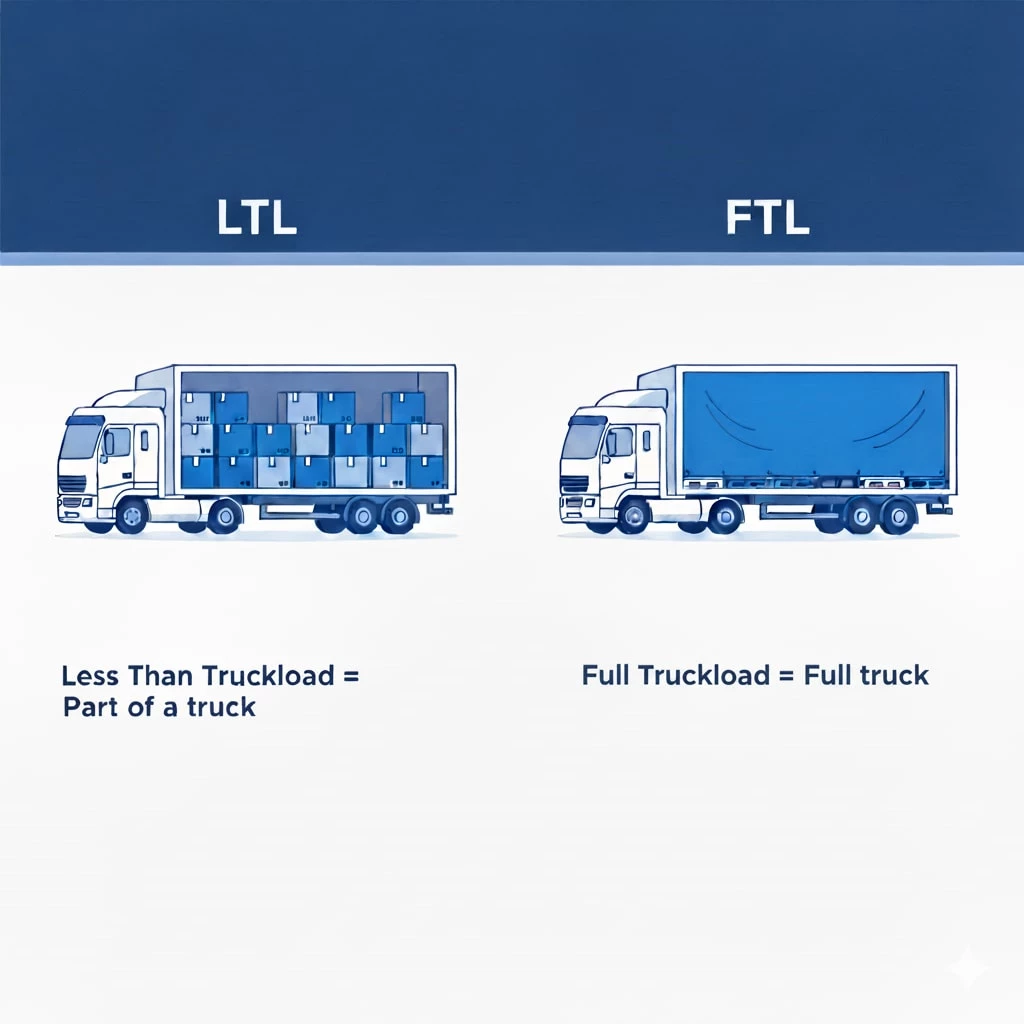
The counterpart to FTL is LTL, which stands for Less Than Truckload. LTL transport means sharing the truck’s cargo space and the transport costs with other companies.
When you book LTL freight, you reserve only a portion of the trailer and pay based on your shipment’s size and weight.
Even if you do not fill an entire truck, FTL may still be necessary. For example, hazardous materials or goods with a risk of cross-contamination are often shipped FTL.
- Full Truckload = Full truck
- Less Than Truckload = Part of a truck
Ship with Bertling: FTL and LTL
One partner, full truckload and less-than-truckload.
Full Truckload, Full Control
Get more speed, safety, and control with Full Truckload. By reserving the entire trailer, your freight moves directly with fewer touchpoints.
Benefits of FTL
- Direct routing: Pickup to delivery in one run with minimal stops and no reloading.
- Fewer touchpoints: Lower risk of damage and loss since the freight stays on the same trailer.
- Faster and more predictable: Improved on-time pickup (OTP) and on-time delivery (OTD).
- Perfect for special freight: Suited to cargo that is large, fragile, high-value, or hazardous and must travel without consolidation.
When FTL may not be the best fit
- Cost vs. fill rate: If you cannot utilize most of the trailer, LTL can be more cost-effective.
Not sure which to choose? Bertling helps you decide between FTL and LTL based on your volume, deadlines and handling requirements.
FTL freight with Bertling
Choose Bertling for global FTL freight. Our fleet covers multiple trailer types and sizes. We plan efficient, direct routes for express deliveries with minimal handling. Backed by a global, continuously expanding network, we keep your cargo moving end-to-end with full visibility.
FTL freight services
At Bertling, we offer a wide range of vehicle and trailer solutions for full truckloads. Let’s walk through three of the most common options:
Curtainsider (Tautliner)
This is the go-to trailer for most European FTL shipments. It keeps the cargo protected from weather, while still making loading quick and flexible, whether you need side loading, top loading, or standard rear loading.
Flatbed trailer
Best when the cargo doesn’t fit neatly into a closed trailer. Flatbeds are often used for machinery, equipment, steel, and construction materials, especially when you need loading from the side or the top.
Low loader (Lowboy)
Purpose-built for heavy and out-of-gauge cargo that exceeds standard height or weight limits. Ideal for large machinery, industrial components, and project cargo requiring specialized handling and permits.
Truck load pricing
When cargo is too heavy, too tall, or simply out of standard dimensions, a low loader is usually the right choice. It’s designed for out-of-gauge shipments like large industrial machinery and project cargo that may require special handling and permits.
What affects truck load pricing?
- Distance and route: Longer hauls, border crossings, or hard-to-reach areas simply cost more in fuel, time, and wear.
- Weight and space: Heavier or bulkier loads burn more fuel and take up more room, which limits capacity.
- Freight type: Fragile, hazardous, or high-value goods need extra care and compliance, which affects the rate.
- Equipment needed: Curtainsider, low loader and flatbed trailers are priced differently.
- Speed and service level: Rush pickups, tight delivery windows, or add-ons like liftgate and inside delivery increase cost.
- Fuel, tolls, and fees: Surcharges and road charges are part of the total.
- Market conditions: Supply and demand, seasonality, weather, and even time of day can nudge prices up or down.
Why book FTL freight with Bertling?
With a global network and trusted carriers, we deliver customized FTL solutions for direct, point-to-point moves. Whether you ship domestically or cross-border, we design lane-specific routes that minimize handling, cut transit times, and improve OTP/OTD.
- Direct, secure transport: One trailer, fewer touchpoints, lower risk of damage or loss.
- Faster, predictable lead times: Optimized routing and express options when speed matters.
- Right equipment, every time: Access to a wide range of trailers and vehicle types matched to your cargo.
- End-to-end oversight: Our experts manage planning, documentation, and tracking for full visibility and control.
Handling complex or oversized loads? Bertling also offers comprehensive project logistics to manage your most challenging FTL requirements from door to door.
In addition to road freight, we also offer air, rail, and sea freight services.
FAQ
What does FTL mean in freight?
In freight, FTL means Full Truckload, where a single shipper books the entire trailer for direct, point-to-point transport with minimal handling.
Is FTL cheaper than LTL?
FTL freight can be cheaper than LTl freight, depending on volume. FTL is usually more cost-effective when you use most of a trailer or need direct transit.
For smaller shipments, LTL often costs less because you only pay for the space and weight you use.
How is FTL pricing calculated?
FTL pricing is mostly driven by distance and route, trailer type, shipment weight and dimensions, service level or urgency, fuel and tolls, plus overall market conditions.