


Europe
Asia Pacific
North America
South America
Middle East
South Africa
Summary of the ocean freight market update in November
- Suez Canal uncertainty continues to add volatility on Asia–Europe trade lanes; full resumption would gradually reduce rates but may cause port congestion during network realignment. - Drewry
- 2026 shipping outlook favors shippers: excess vessel capacity + weak demand = more competitive carrier pricing and improved contract terms.
- Carriers expected to invest more in AI, visibility tools, and flexible contracting.
- Global container freight (early 2026): Overcapacity and slow demand growth create a buyer’s market; US imports pressured by tariffs, shifting trade flows toward Europe, Africa, and Latin America. Potential disruptions from US restocking cycles and Red Sea instability.
- US tariff exemptions on ~200 Chinese products extended until 10 November 2026, reflecting progress in US–China trade negotiations. - RVIA
Energy Price - November 2025
20 October 2025 = USD61.01
20 November 2025 = USD63.59
- Global energy employment hit 76 Mio. in 2024, up 5 million from 2019; energy job growth (2.2%) nearly twice the global average. Bottlenecks persist in skilled labor. - IEA
- EIA forecast: Crude oil prices expected to fall through late 2025 and average $55/barrel in 2026 due to rising inventories and production outpacing demand. - USEIA
- US oil production forecast raised slightly to 13.6 Mio. b/d in 2025–2026. - USEIA
Corporate and Geopolitical Energy Developments
- ExxonMobil and Chevron competing to take over Lukoil’s Iraq assets at the major West Qurna-2 oilfield; Iraq commits to negotiating exclusively with US firms to strengthen ties with the US administration. - MEES
- US DOE grants $400 Mio. to TVA for deployment of GE Hitachi’s BWRX-300 SMR, aiming for the first US commercial small modular reactor in the early 2030s, accelerating next-generation nuclear technology. - Global Energy World
Ocean freight trends - Europe
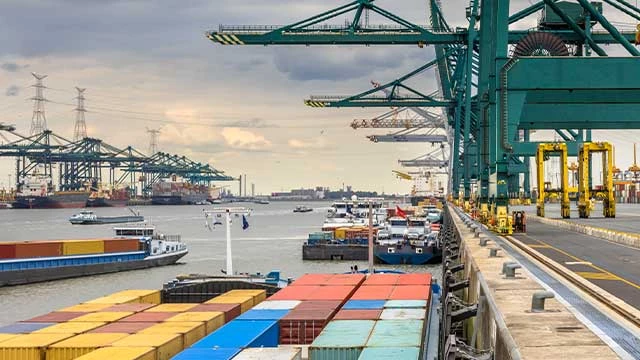
The key discussion point at present is the potential shift back to Suez Canal routings for container services. Carriers have begun testing this approach, and the first services are expected to resume regular Suez transits, but starting with eastbound voyages only. The impact on both freight rates and schedule reliability should become clearer in Q1.
Main Reasons for Bottlenecks
Over the next 6–8 weeks, space is expected to remain tight on Asia–Europe trades. Vessel utilization appears strong. However, it remains uncertain whether capacity is being actively managed to support current rate levels.
Impact on Market and Rates
- Spot markets have strengthened across the mainhaul trades, with higher rate levels observed on several key lanes.
- In contrast, backhaul trades remain weak and continue to face significant downward pressure.
Outlook
- Mainhaul rate levels are likely to remain firm in early Q1, with a potential shift in market dynamics toward the end of the quarter. For backhaul trades, we do not currently anticipate a material change in carrier pricing behavior.
- A broader return to Suez Canal routings could introduce additional volatility, particularly on mainhaul lanes, as carriers may follow early movers to capture the substantial transit-time advantage.
Ocean freight trends - Asia Pacific
Transpacific demand and spot rates have decreased from mid-2025. However, there are some firm demands of shipping due to electronics, e-commerce, and holiday replenishment from November to December. Freight rates are stabilizing as a result. This is further anticipated due to the US-China tariff truce being extended through the recent agreements, removing immediate threat of large spot rates spikes as seen earlier in 2025.
Shipping lines are also focusing on yield management by continuing selective blank sailings and tactical redeployment to protect rates level and service reliability.

Main Reasons for Bottlenecks
Several factors are contributing to bottlenecks in the Asian shipping industry:
- Transshipment Hub Congestion: Singapore, Port Klang, and Busan are facing vessel bunching after the regional holidays and feeder shortages, thus, affecting transshipment flexibility and increasing feeder waiting times.
- Container Equipment Imbalances: Local shortages of 40’HC in specific export markets and cost of repositioning empty containers are causing stuffing delays and higher origin handling rates.
- Weather Disruptions: Seasonal storms and localized infrastructure outages continue to create intermittent port dwell and berth delays.
Impact on Freight Rates
- Rates are staying elevated through November as carriers manage space through blank sailing and redeployment to fill pre-Christmas departures.
- Shippers are also likely to prioritize space certainty over cost savings due to year-end deliveries, so rates will remain elevated but stable.
Outlook
- Moving into December, we can expect a short-lived window of stability before the next rush of Lunar New Year shipping begins. Carriers are likely to maintain tight control of capacity through the end of the year, while shippers focus on clearing remaining 2025 volumes and preparing for the pre-Lunar New year surge in January 2026.
- Weather will continue to pose a risk across the ASPAC region, and with global demand showing early signs of recovery, rates may stay firm yet elevated into early 2026.
- Early and forward planning, flexibility, and accurate forecasting will be the deciding factors to meet on-time shipping expectations.
Ocean freight trends - North America
- US. imports are projected to fall significantly year-over-year in 2025, hitting lows not seen since 2020, as retailers have pulled back on orders amidst tariff uncertainty.
- Freight rates remain low due to overcapacity (large vessel fleet growth vs. demand), leading to blank sailings by carriers.
- While overall freight demand is soft, consumer spending remains resilient but more cautious, driving more efficient inventory management.
Main Reasons for Bottlenecks
- The primary disruptor continues to be the ongoing uncertainty surrounding U.S. trade policies and tariffs, particularly those concerning China.
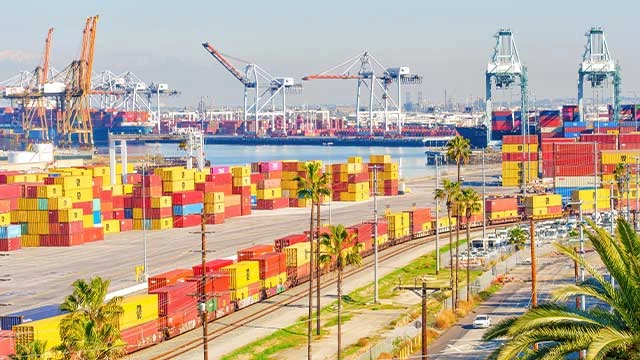
- Shippers had front-loaded imports earlier in the year to avoid potential new fees, which has contributed to the Q4 slowdown.
- A potential Supreme Court ruling on tariffs is the variable that could unlock stalled demand in 2026.
Impact on Freight Rates
- Following three weeks of declines that pushed spot rates to their lowest level since January 2025, rates on the Transpacific fronthaul have recovered to some extent.
- Spot rates from Shanghai to Los Angeles climbed 8% to $2,256 per 40ft container, while those to New York rose 6% to $2,895.
- Shifting away from traditional fortnightly adjustments, some carriers have adopted a weekly strategy for GRIs.
- Instead of announcing large hikes that tend to erode quickly, carriers are now introducing smaller, more frequent increases to maintain consistent upwards pressure on spot rates. - Drewry
- "The backdrop is still one of oversupply compared to demand and that is seen clearly in the fact rates are still not back to where they were a month ago despite a fairly chunky increase in the past week. Shippers should reflect on this weaker market the next time a carrier asks for a general rate increase (GRI), because it would not appear to be justified against the level of demand versus capacity." - Xeneta
Outlook
- US imports are expected to remain sluggish due to ongoing tariffs, while China diversifies exports away from North America.
- A significant influx of new container ship capacity is outpacing demand growth and will put downward pressure on rates.
- Potential US economic stabilization could trigger significant restocking, boosting demand, but this remains uncertain.
- Carriers could return to the Suez Canal and will impact.
The outlook going into 2026 sees a more favorable environment for shippers due to ample capacity and weaker demand. Carriers will compete more fiercely for cargo, potentially leading to better contract terms. Watch for lines investing in AI, better visibility, and flexible contracting strategies.
Ocean freight trends - South America
The East Coast South America (ECSA) shipping market in November 2025 was shaped by strong import demand and notable operational disruptions.
Despite global rate volatility - especially on the Transpacific - Asia-ECSA container rates remained firm due to sustained inbound volumes and strategic supply management.
Breakbulk continued to outperform, supported by energy infrastructure projects and tight specialized capacity.
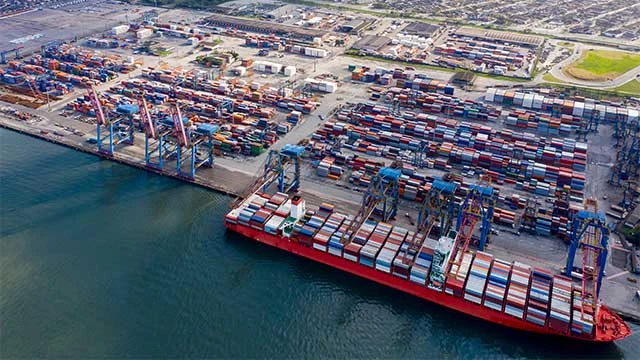
- Strong Imports: High demand in Brazil and Argentina kept inbound container rates stable and absorbed available capacity.
- Breakbulk Strength: Project cargo and agricultural flows supported firm charter rates and strong pricing power.
- Managed Container Capacity: Adequate capacity but disciplined allocation prevented rate declines; outbound rates were affected by container availability.
Main Reasons for Bottlenecks
- Severe Congestion in Santos: Berth delays (2–5 days), yard saturation, and elevated demurrage.
- Antwerp Port Strike (24-26 November): Forced cargo diversions in Europe, raising drayage costs and lengthening transit times to/from ECSA.
Impact on Freight Rates & Dynamics
- Asia–ECSA: $1,850–$2,150 per 40ft, up 2–8% month-on-month due to strong demand.
- ECSA–Europe: +$150–$250 per 40ft, mainly driven by Antwerp-related diversions and inland cost spikes.
Outlook (Q1 2026)
- Continued strong imports, stable Asia-ECSA rates, resilient breakbulk performance, and possible gradual normalization of Suez routings.
- Santos congestion expected to persist, lingering European disruptions post-strike, ongoing war risk surcharges, and continued low global schedule reliability.
Ocean freight trends - Middle East
- Partial Red Sea re-entry: CMA CGM has announced reintroducing Suez transits and Maersk signalled intent to return as conditions allow — carriers are phasing in cautiously. This reduces detour risk but creates a phased, uneven capacity restoration.
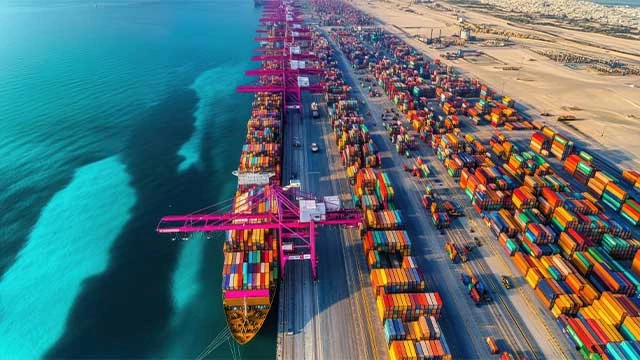
- Strong port activity in pockets: Qatar ports reported a large November throughput surge (~+60% YoY for cargo volumes in November 2025). This points to restocking and higher demand in certain hubs.
- Air capacity additions: Emirates SkyCargo and peers expanded capacity in 2025 (freighters and partnerships), softening very short-term yield spikes for standard cargo but keeping premiums for urgent/specialised shipments.
Main Reasons for Bottlenecks
- Port transhipment chokepoints during reintegration of Suez services (timing mismatch between carriers).
- 40’ equipment imbalances and localized empty container shortages causing lead-time slips.
- Last-mile warehousing & haulage constraints in peak season (tight occupancy).
- 2-3 days port Congestion expected for all BB in all major ports ( Jeddah / Dammam / Jebel Ali).
Impact on Freight Rates
- Ocean spot: Mixed — lane-specific upward pressure where capacity is still constrained; expect dispersion (some lanes firm, others flat/soft).
- Surcharges / War-risk: As perceived Red Sea risk eases carriers/insurers are adjusting premiums, but changes will be uneven until sustained stability arrives.
- Air yields: Moderating overall due to capacity, but urgent/time-sensitive air freight still attracts premiums.
- Inland: Short-term storage/last-mile cost uptick due to occupancy and driver supply dynamics.
Outlook (30-90 days)
- Cautious normalisation: carriers are starting to re-open Suez/Red Sea routings (picking up gradually), while carriers that remain cautious will phase in services — that combination gives a 30–90 day window of improving capacity but episodic volatility (pockets of tightness and short spikes in rates/surcharges).
Ocean freight trends - South Africa
- South African container terminals handled an average of 10,437 TEUs daily, down from 11,150 TEUs the previous week.
- The latest Southern Africa terminal and service update for week 46 provides good reading for most of our major South African terminals.
- No waiting times were recorded at most ports, this will soon change due to forecasted adverse weather conditions.
Main Reasons for Bottlenecks
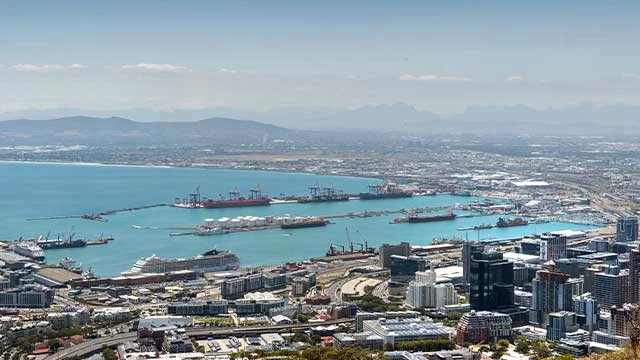
- Over 20 operational hours were conceded at the Port of Cape Town this week due to adverse weather conditions.
- Equipment challenges and bad weather prevented optimal operational performance in Durban.
- Inclement weather, vacant berths, and high swells ensured operational disruptions at our Eastern Cape Ports.
- Marine equipment challenges proved to be the primary operational constraint at the Port of Richards Bay.
Impact on Freight Rates
- Global container shipping spot rates fell after four weeks of increases, with the World Container Index dropping 5.1% to $1,859 per 40-ft box.
- Rates from Shanghai to major U.S. ports declined sharply due to softer demand following early holiday imports, while Asia-Europe routes saw slight gains.
- Selective carrier discounts have also pressured spot prices, reflecting a muted peak season. Meanwhile, the vessel charter market stayed steady, with the Harpex Index unchanged at 2,184 points.
Outlook
- Oversupply and capacity risks: The orderbook has climbed to 34% of global fleet capacity, raising oversupply concerns with record vessel deliveries expected by 2028.
- Port congestion: Congestion is moderate but noticeable at Shanghai/Ningbo and in Northern Europe, contributing to localized supply constraints.
- Regulatory shifts: The US has reduced tariffs on several key food imports, adding to a landscape already marked by structural change and regulatory uncertainty.
- Market performance: Entering Q4, global liner performance softened, with the CCFI falling ~14% QoQ.
- Transpacific: Spot rates fell sharply due to weaker demand.
- Asia–Europe: Rates stayed more resilient, supported by congestion-related supply tightness.
- Intra-Asia: Rates remained stable, and Asian carriers continued to show stronger EBIT margins than their European counterparts.
Customer advice
Considering the ever-changing market conditions and forces, please:
- Let's closely monitor the developments in the US trade policy and the impending world events to maneuver potential challenges effectively in the logistics industry.
- Think ahead and book well in advance. Try to plan for 6 months ++.
- Consider that the market can change significantly. Further disruptions can happen anytime.
- Identify contract options that enable flexibility and resilience for your business.
- Plan 3–4 weeks in advance for all Asia-related cargo.
- Consider alternative European gateways or routings where feasible.
- Maintain flexible delivery schedules to absorb delays.
- Stay engaged for tactical rate and space guidance.
However, it is our job at Bertling to keep global supply moving and do all we can and apply our knowledge, network and expertise to protect our clients’ while taking the latest market developments into account. We are there to find the best solutions to ensure cargo flows.


