


North America
Europe
Asia Pacific
Middle East
South Africa
South America
Executive Summary
The ocean freight market became significantly more volatile in March 2026. The first phase, visible in late February, was still characterized by a soft post-Lunar New Year market with easing Transpacific and Asia-Europe rates. The second phase began after the 28 February escalation in the Middle East, which quickly shifted pricing power back toward carriers, particularly on Europe- and Middle East-linked trades.
By 20 March, Xeneta reported Far East–North Europe spot rates at USD 2,705/FEU and Far East–Mediterranean at USD 4,211/FEU, representing month-on-month increases of 22% and 26% respectively. Far East–USWC increased more moderately to USD 2,118/FEU. Freightos and Drewry confirmed the rebound, especially on Europe and Mediterranean trades.

LET US KNOW YOUR OPINION
How do you like our Market Reports? Fill in our survey (it only takes a minute) to share for feedback and gain even better market insights in the future.
Operationally, schedule reliability remained weak at 62.4% in January, while March disruptions added further pressure through port congestion, vessel diversions, war-risk costs, and bunker surcharges. In contrast, the breakbulk and project cargo segment remained firmer than the container market, supported by constrained MPP tonnage and resilient project demand. (Source: Xeneta)
Global Economic & Trade Context
The macroeconomic backdrop in March was not driven by strong demand growth. The IMF’s January 2026 update continued to project global growth of 3.3% for 2026, indicating a stable but not particularly strong demand environment for ocean freight. At the same time, the WTO warned in March that merchandise trade growth in 2026 could slow materially, with Middle East tensions and rising energy costs acting as downside risks. (Source: IMF)
The market then absorbed a second and far more significant shock: the disruption in the Strait of Hormuz after 28 February. Project44 described this as the largest coordinated rerouting response since the Red Sea crisis, with diversions rising by more than 360% and daily average diversions increasing to 1,010, compared to a baseline of 218. Zencargo and Maersk also pointed to widespread carrier suspensions, booking restrictions, insurance pressure, and sharply declining network efficiency. (Source: project44)
Container Freight Market Analysis
Spot Rate Developments
The March market can best be described as a two-stage development.
By 4 March, shortly after the Middle East disruption started to impact the market, Freightos still showed only a limited rate reaction, with most major trades remaining broadly flat. However, this changed quickly by 17 March, when outbound Asia trades began increasing by approximately 10–20%, depending on the corridor.
Xeneta’s market data as of 20 March illustrates this shift clearly:
- Far East → US West Coast: USD 2,118/FEU
- Far East → US East Coast: USD 3,008/FEU
- Far East → North Europe: USD 2,705/FEU
- Far East → Mediterranean: USD 4,211/FEU
- North Europe → US East Coast: USD 1,482/FEU
(Source: Xeneta)
Drewry also confirmed the upward trend. Its 19 March WCI increased by 2% to USD 2,172 per 40ft, with Shanghai–Rotterdam at USD 2,478 and Shanghai–Genoa at USD 3,108. Drewry noted that Asia-Europe rates were still relatively stable compared to the sharper Gulf-related dislocations, but further increases were expected in the following weeks. (Source: Drewry)
What the Rate Structure Means
Three key operational conclusions can be drawn:
First, the March rate rebound was not equally broad-based across all trades. Xeneta noted on 13 March that the Transpacific market remained comparatively weak, while Europe-linked trades were already moving upward more decisively. This is consistent with the observed data: Europe and Mediterranean trades reacted faster and more strongly than the Pacific. (Source: Xeneta)
Second, the Mediterranean premium widened significantly. By 20 March, Far East–Mediterranean at USD 4,211/FEU was approximately 56% higher than Far East–North Europe at USD 2,705/FEU, reflecting the more direct exposure of Mediterranean services to Suez/Red Sea disruption and cascading transshipment pressure. (Source: Xeneta)
Third, the market became increasingly fragmented. Xeneta reported that some shippers were already securing space at USD 4,000–5,000/FEU from China into North Europe and the Mediterranean, around 50% above published market averages. This indicates that benchmark spot rates no longer fully captured the pricing reality once urgency and space security became decisive factors. (Source: Xeneta)
Carrier Strategies: Capacity Management, Blank Sailings, GRIs, and Surcharges
Carrier behavior in March was defensive, but effective. The pattern suggests that carriers initially withdrew capacity to stop the post-CNY rate decline and then selectively reintroduced space once conflict-related pricing momentum returned. This does not reflect a structurally tight market, but rather managed scarcity layered on top of operational disruption. (Source: Xeneta)
Carrier pricing announcements reinforced this development, particularly with new Far East–Europe FAK levels effective from 15 March. However, the current situation suggests that pricing levels in April are likely to remain broadly stable, as underlying demand volumes are still not particularly strong. A further significant rate increase therefore appears unlikely unless additional disruption occurs.
Conflict-related surcharges also accelerated. Hapag-Lloyd introduced a contingency surcharge for Red Sea-related shipments from 3 March at USD 1,500/TEU for standard containers and USD 3,500/container for reefer and special equipment. Maersk also implemented a temporary global Emergency Bunker Surcharge effective 25 March, including USD 400 per 40’ headhaul on long-haul dry cargo. (Source: Hapag-Lloyd)
Bunker costs became a direct freight inflation driver in March. Carriers introduced global Emergency Bunker Surcharges with regular review mechanisms in response to sharply higher fuel costs. The rationale is clearly supported by bunker market developments: VLSFO reached around USD 1,039/mt in Fujairah, USD 986/mt in Singapore, and USD 829.5/mt in Rotterdam, while Singapore VLSFO was reported to have increased by 101.2% since 27 February. As a result, bunker cost pass-through became a central part of carrier pricing, rather than a routine BAF adjustment.
Breakbulk & Project Cargo Segment
The breakbulk and project cargo segment continued to outperform the liner market in terms of pricing stability.
Project Cargo Journal reported that the Toepfer Multipurpose Index rose to USD 12,750 in March 2026, indicating a modest recovery in MPP charter rates following Lunar New Year. Drewry’s specialized shipping outlook also remained constructive, stating that project cargo carrier rates are expected to rise gradually in 2026, while general cargo markets remain under greater pressure. (Source: Project Cargo Journal)
The relative resilience of the breakbulk and project segment is closely linked to supply structure. Project Cargo Journal noted that the MPP market remains constrained, while another March industry source highlighted that around 60% of the global MPP fleet is at least 15 years old, and 30% is more than 20 years old. This limits the ability to expand capacity quickly and continues to support pricing in specialized cargo segments. (Source: Project Cargo Journal)
Compared with the container market:
- Pricing: Project cargo rates remain firmer and less benchmark-driven.
- Lead times: Lead times remain longer due to vessel selection, crane capacity, engineering requirements, and berth feasibility.
- Volatility: Volatility is lower than in standard container trades, although Middle East exposure creates meaningful execution risks for Gulf-linked project cargo.
(Source: Project Cargo Journal)
Regional Insights
Ocean freight trends - North America
Main market trend
- Softer underlying import demand than in Europe, with only a delayed and moderate rate rebound.
Main reasons for bottlenecks
- Inland flow and schedule reliability rather than berth congestion.
Impact on Freight Rates
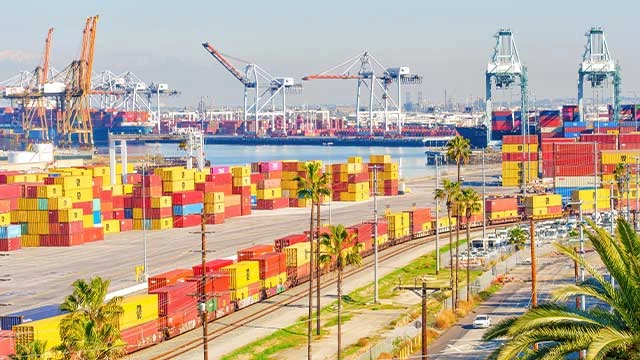
- Rate recovery lagged Europe; by mid-March, Asia–USEC outperformed Asia–USWC, suggesting greater pressure on East Coast networks than on the Pacific. (Source: Freightos)
Ocean freight trends - Europe
Main market trend
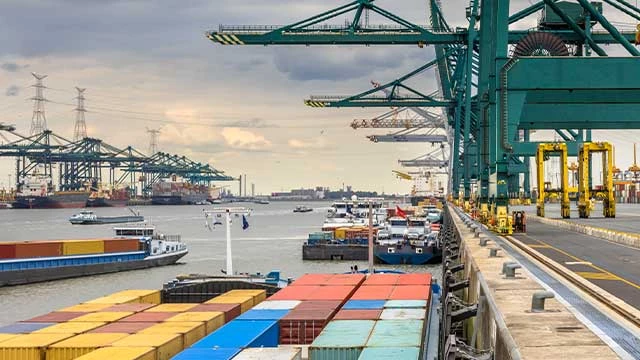
- Strongest container rate reaction among the major consumer regions.
Main reasons for bottlenecks
- Weather-related disruption combined with off-schedule arrivals and transshipment pressure.
Impact on Freight Rates
- Both direct freight rates and indirect logistics costs increased; North Europe firmed, but the Mediterranean tightened faster and became materially more expensive. Maersk also flagged continuing weather disruption across Mediterranean and North European hubs. (Source: Xeneta)
Ocean freight trends - Asia
Main Market Trend
- Post-CNY weakness gave way to rerouting pressure and transshipment congestion.
- The Asia shipping market has entered into a phase of high volatility driven by geopolitical shocks, rather than purely demand & supply fundamentals. The ongoing conflict in the Middle East, particularly around the Strait of Hormuz, is now a major disrupter of global shipping and energy flows, and Asia is not spared being the most exposed region.
- On the other hand, the underlying container demand remains moderate to weak, especially post-lunar new year, with some trade lanes already seeing softer volumes and rates correction. In short, the fundamentals are soft, but disruptions are keeping the market unstable and elevated in cost terms.

Main reasons for bottlenecks
- Gateway and transshipment congestion, particularly in Southeast Asia and India.
- Marine fuel prices in Asia have surged to record highs due to the Middle East supply disruption.
- Ships are facing refueling delays, especially in key hubs such as Singapore, Shanghai, among others.
- Land transportation costs have also risen as evidenced from the increase in diesel fuel prices which are mainly used for commercial purposes.
Impact on Asian ports
- Major Asian hubs increasingly acted as overflow points for diverted cargo, pushing up India-related and transshipment-related pricing. (Source: Xeneta)
- Continued instability in the Middle East is forcing vessels to avoid high risk zones and reroute via longer paths, i.e. around Africa, is adding at least 10-14 days transit time on major trade lanes. Vessel bunching and port handling capacity deficiency is an effect from such instability.
- Congestion at bunkering and transshipment hubs such as Singapore, Shanghai, Ningbo, and Zhoushan.
Impact on Freight Rates
- Freight rates are seeing upward pressure from cost-side shocks, and not due to demand.
- Higher bunker costs, war risk premiums, and rerouting surcharges.
- Should expect rates spikes or surcharges on Asia to Europe and Middle East related trades.
Ocean freight trends - Middle East
Main market trend
- The region moved from being a regional risk factor to becoming a driver of global market dislocation.
Main reasons for bottlenecks
- Closure and suspension effects around Hormuz, combined with a de facto re-tightening of Red Sea conditions.
Impact on Freight Rates
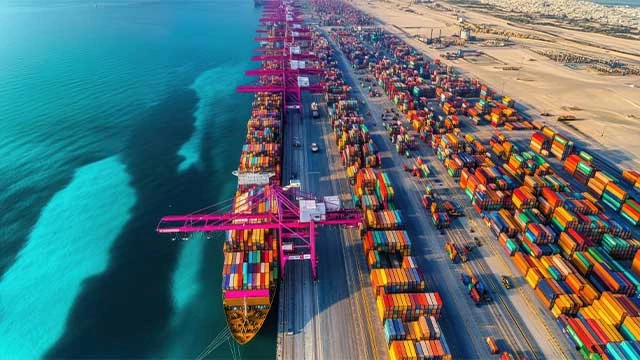
- Carriers suspended transits, insurers tightened coverage, and freight surcharges rose rapidly. Project44 indicated that some Gulf ports, including Jebel Ali, were effectively cut off. (Source: project44)
Ocean freight trends - South Africa
Main market trend
- Cape routing remained strategically important as an alternative corridor.
Main reasons for bottlenecks
- Weather-related disruption and secondary congestion risks due to ongoing diversions.
Impact on Freight Rates
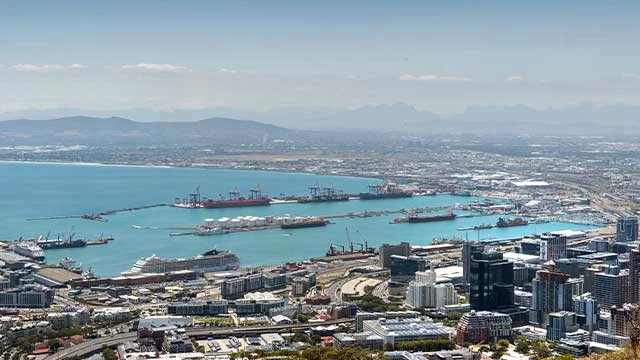
- Routing optionality increased South Africa’s importance, but also exposed regional ports to operational spillover rather than direct structural gains. The region remains more of an indirect beneficiary and risk zone than a primary pricing center. (Source: Zencargo)
Ocean freight trends - South America
Main market trend
- Less directly exposed than Europe, but still affected by carrier repricing and global network adjustments.
Main reasons for bottlenecks
- Localized port and hinterland inefficiencies rather than direct exposure to the main geopolitical chokepoint.
Impact on Freight Rates
Spotrate upside was less pronounced than on Europe and Mediterranean trades, but upward carrier pricing intent remained visible through broader FAK and surcharge activity.
(Source: Hapag-Lloyd)
MSC will apply with immediate effect (booking date), for all bookings requested for the destinations Haifa and Ashdod the War Risk Surcharge (WAR) of USD 9 x TEU and from 1 April 2026,(booking date), for all bookings requested for the destinations Haifa and Ashdod the Emergency Revenue Recovery (ERR) as follows:
- USD/EUR 2,000 x 20’ DV & 40’ DV/HC
- USD/EUR 3,000 x 40’ HR
- Hapag Lloyd implemented the EFS (Emergency Fuel Surcharge)applied as per link below: Implementation of Emergency Fuel Surcharge (EFS) - Hapag-Lloyd
Operational Insights
The most accurate reading of March is that congestion became increasingly network-based rather than purely port-specific. The issue was no longer limited to individual congested ports; instead, cargo was re-routed into India, Sri Lanka, Malaysia, and Singapore, creating pressure at alternative gateways. Xeneta’s congestion figures for Port Klang, Colombo, Tanjung Pelepas, and Singapore clearly illustrate this pattern. (Source: Xeneta)
Project44’s diversion data reinforces this view. By the second week of the Hormuz disruption, Dubai/Jebel Ali had become a major origin point in revised service networks, Hambantota had gained importance as a destination hub, and India’s share of diversions had increased further. This indicates that forwarders should prepare not only for longer transit times, but for actual service redesign and routing changes. (Source: project44)
Bunker was no longer a neutral background cost by mid-March. The introduction of Emergency Bunker Surcharges shows that carriers were explicitly passing through fuel-related disruption costs, with surcharges applied globally from March and subject to further revision as bunker markets remain volatile.
Market Outlook & Strategic Recommendations
Short-Term Forecast: Next 1–3 Months
Base case for April–June 2026:
- Containers: Europe- and Middle East-linked trades are expected to remain elevated and volatile, while Transpacific may improve only modestly unless carriers maintain strict capacity discipline.
- Carrier behavior: Further GRIs, conflict-related surcharges, bunker pass-throughs, and tactical capacity management remain likely.
- Reliability: Schedule reliability is expected to remain fragile; operational normalization will likely lag behind any rate stabilization.
- Breakbulk/project cargo: The segment is expected to remain firmer than the container market, particularly for energy, industrial, and infrastructure-related cargoes. (Source: Xeneta)
- Middle East: Significant delays and congestion are expected at affected destination ports due to re-routing and service adjustments.
- Origins: Interruptions may also occur at origin ports where cargo for affected destinations is not loaded as scheduled. This is already visible, for example, in citrus exports from South Africa to the Middle East.
- Storage impact: Delays and rolling cargo are likely to increase pressure on storage capacity and terminal handling infrastructure.
Customer Advice
- Let's closely monitor the developments in the US trade policy and the impending world events to manoeuvre potential challenges effectively in the logistics industry.
- Think ahead and book well in advance. Try to plan for 6 months ++.
- Consider that the market can change significantly. Further disruptions can happen anytime.
- Identify contract options that enable flexibility and resilience for your business.
- Plan 3–4 weeks in advance for all Asia-related cargo.
- Consider alternative European gateways or routings where feasible.
- Maintain flexible delivery schedules to absorb delays.
- Stay engaged for tactical rate and space guidance.
However, it is our job at Bertling to keep global supply moving and do all we can and apply our knowledge, network and expertise to protect our clients’ while taking the latest market developments into account. We are there to find the best solutions to ensure cargo flows.


