


Ro-Ro shipping, also meaning Roll-on/Roll-off shipping, plays a vital role in international maritime freight transport. This type of shipping provides a practical and effective solution for moving specific categories of cargo.
In this article, we will explore what Ro-Ro shipping is and how it works.
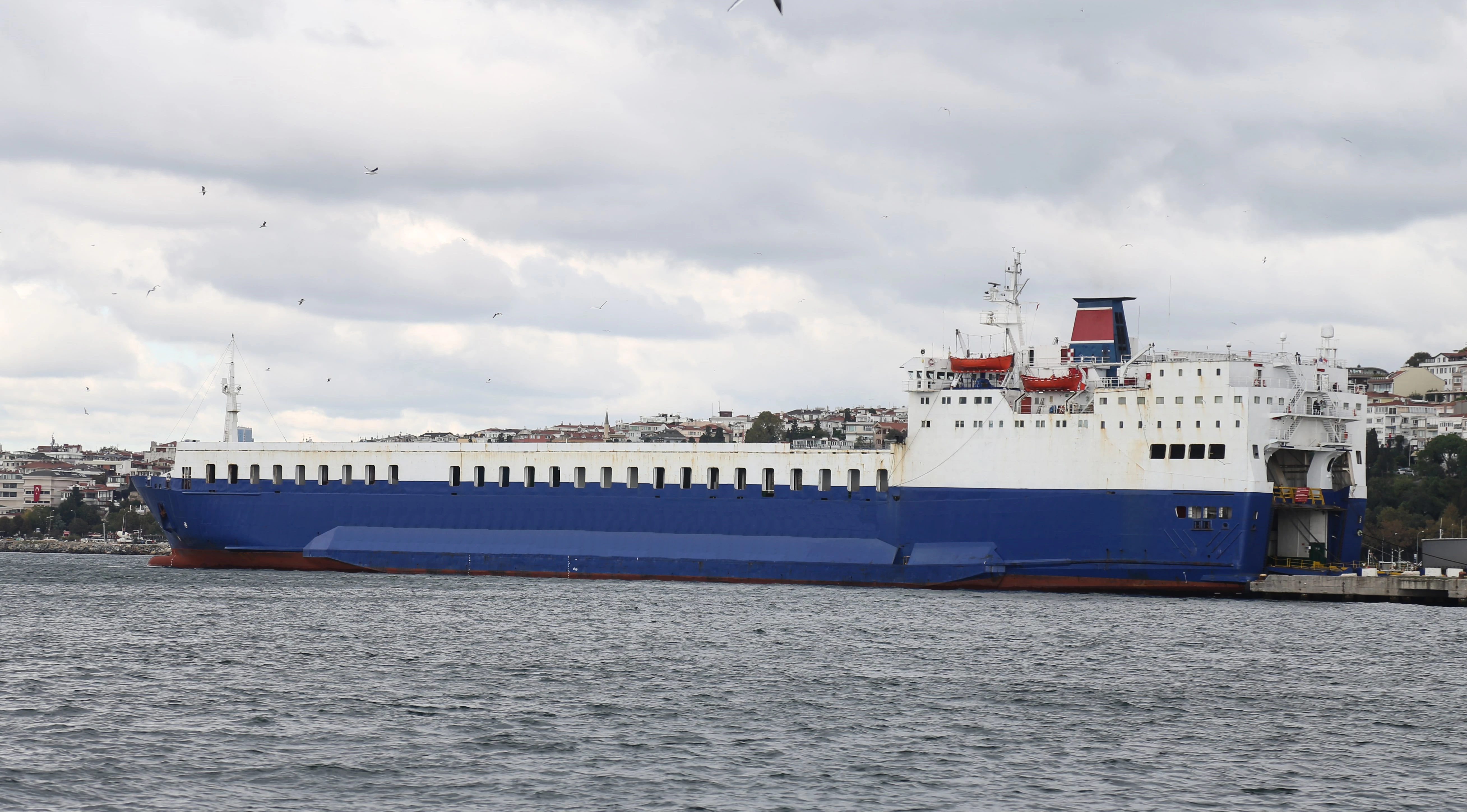
What is a Ro-Ro ship?
Ro-Ro stands for Roll-on/Roll-off and refers to ships designed to carry wheeled cargo such as cars, trucks, trailers, and other vehicles.
In the International Convention for the Safety of Life at Sea (SOLAS), Ro-Ro ships are defined as passenger ships with special spaces for Ro-Ro cargo.
Ro-Ro ships are different from Lo-Lo (lift-on/lift-off) ships, which use cranes to load cargo. On a Ro-Ro ship, vehicles are driven on and off the vessel using built-in ramps. These ramps are usually located at the back of the ship, but some vessels also have ramps at the front or on the sides. Ro-Ro ships can be used for both civilian and military purposes.
Ro-Ro vessels were first built in the 19th century to transport railway cars across rivers when bridges were too narrow for trains to cross.
How Ro-Ro shipping works
Ro-Ro shipping is designed to make transporting wheeled cargo simple and efficient. The entire process is based on driving vehicles directly on and off the vessel, rather than lifting them with cranes.
1. Loading
At the port of departure, vehicles such as cars, trucks, or trailers are driven onto the ship using built-in ramps. These ramps are usually located at the rear of the vessel, but in some cases they may also be on the side. Inside the ship, there are several decks where the vehicles are parked in designated spaces.
2. Securing
Once the vehicles are in position, they are carefully secured to ensure safety during the sea journey. Straps, chains, and other lashing equipment are used to hold the cargo firmly in place and prevent any movement caused by waves or ship motion.
3. Discharge
When the ship arrives at its destination, the process is reversed. The securing equipment is removed, and the vehicles are driven off the ship via the ramps. This straightforward unloading method allows for faster turnaround times compared to other shipping methods.
Also read: Emerging current trends in supply chain management 2025
Advantages of Ro-Ro shipping
Ro-Ro shipping offers several benefits, especially when speed and efficiency are important. We list advantages of Ro-Ro shipping below.
1. Speed
One of the biggest advantages of Ro-Ro shipping is how fast the loading and unloading process is. Vehicles can be driven directly onto and off the vessel using ramps, without the need for cranes or complex port operations. This makes port handling much quicker and more flexible.
2. Time saving
Because loading and unloading are so efficient, trucks and vehicles can leave the port shortly after the ship docks and continue their journey to the final destination. This significantly reduces waiting times and helps improve overall delivery schedules.
3. Reduced cargo handling
Ro-Ro shipping involves very little cargo handling at the port. Since vehicles are driven on and off the ship instead of being lifted, the risk of accidents and cargo damage is much lower compared to other shipping methods.
4. Extended transport reach
Ro-Ro shipping also allows land transport operators to cover longer distances more efficiently. By using sea routes to bypass long or congested land routes, vehicles can shorten their journey, save fuel, and reach destinations that would otherwise require significant detours.
Read more about international shipping here.
What are the disadvantages of Ro-Ro shipping?
While Ro-Ro shipping offers many advantages, there are also some limitations to consider depending on the type of cargo and transport needs.
1. The cargo must be suitable for Ro-Ro handling
RoRo shipping is often associated with wheeled cargo such as cars, trucks, trailers, and machinery. However, it is also well suited for other cargo types, as non-wheeled goods can be rolled onboard using mafi trailers or other specialized load carriers.
RoRo requires cargo to be compatible with roll-on/roll-off handling, but in return it can reduce lifting operations and improve safety. For oversized cargo, RoRo can in many cases be a strong alternative to breakbulk, offering safer handling and fewer crane lifts during loading and discharge.
2. Less frequent routes
Compared to container shipping, Ro-Ro services often operate on fewer routes and call at a more limited number of ports. This can reduce flexibility when planning shipments and may require additional land transport to reach the final destination.
Misconception: RoRo shipping offers limited cargo protection
RoRo shipping is sometimes perceived as offering limited cargo protection compared to container transport. However, this is a misconception.
On Bertling’s RoRo services, almost all cargo is stowed below deck, providing significantly better protection from weather and external exposure than many container solutions where cargo may be carried on open decks. This reduced exposure to rain, wind, and salt spray is particularly valuable for sensitive or high-value rolling cargo.
Bertling’s RoRo vessels are purpose-built for vehicles and rolling cargo, allowing trailers to be transported fully below deck, on a weather deck, or in a semi-protected position depending on customer needs. In most cases, cargo is shipped fully below deck, ensuring reliable protection throughout the voyage.
Variations of a Ro-Ro ship
There are several types of Ro-Ro vessels, each designed to meet different transport needs depending on the type of cargo they carry and how they are used.
- Car carriers (PCC – Pure Car Carrier): These ships are built exclusively to transport cars. They feature multiple decks dedicated to vehicle storage and are optimized to carry large numbers of cars safely and efficiently.
- Pure Car and Truck Carriers (PCTC): PCTC vessels are designed to transport both cars and larger vehicles such as trucks. They have multiple vehicle decks, some of which can be adjusted or reinforced to accommodate taller or heavier vehicles.
- ConRo (or RoCon): ConRo ships are hybrid vessels that combine Ro-Ro and container shipping. Vehicles are loaded onto the lower decks using ramps, while containers are stacked on the upper decks. This design allows the ship to carry different types of cargo on the same voyage.
- RoLo (Roll-on/Lift-off): RoLo vessels combine roll-on/roll-off and lift-on/lift-off methods. Vehicles are driven on and off the ship via ramps, while other types of cargo are handled with cranes and stored on separate decks.
- RoPax (Roll-on/Roll-off Passenger): RoPax ships are built to carry both freight vehicles and passengers. They include passenger facilities and are commonly used for ferries and cruise ferries operating on regular routes.
- LMSR (Large, Medium-Speed Roll-on/Roll-off): LMSR vessels are specialized Ro-Ro ships operated by the Military Sealift Command (MSC). They are used mainly for military purposes, transporting vehicles, equipment, and supplies quickly over long distances.
Ro-Ro transport vs. container transport: Which one is right for you?
Choosing between Ro-Ro shipping and container shipping depends largely on the type of cargo you need to transport and your logistical priorities.
- Choose Ro-Ro shipping if you are moving a large number of vehicles or heavy machinery that can be driven or rolled onto a vessel. Ro-Ro transport is often more cost-effective and offers faster loading and unloading. If speed and efficiency are important, Ro-Ro shipping could be the one for you.
- Choose container shipping if your cargo requires higher levels of security or includes high-value goods. Container transport is also better suited for shipping different types of cargo and is often the preferred option when the destination port does not have dedicated Ro-Ro facilities.
Also read: Which transport solution should you choose?
FAQ
What is the largest Ro-Ro in the world?
The MV Tønsberg, part of Wallenius Wilhelmsen’s MK-V class, is the world’s largest Ro-Ro vessel. It has a cargo capacity of 138,000 cubic meters and was built in 2011 by Mitsubishi Heavy Industries. The ship is 265 meters long and 32 meters wide, with six decks designed to carry cars, heavy machinery, and breakbulk cargo.
What does Ro-Ro mean in shipping?
Ro-Ro stands for Roll-on/Roll-off. In shipping, it refers to vessels where cargo, usually vehicles, is driven directly onto and off the ship using built-in ramps instead of being lifted by cranes.
Is Ro-Ro only for vehicles?
Ro-Ro shipping is mainly used for wheeled cargo. However, some non-wheeled cargo can also be transported if it is placed on special rolling platforms.
How fast can a Ro-Ro ship go?
Most Ro-Ro ships travel at speeds between 16 and 23 knots (about 33–43 km/h). The exact speed depends on the vessel type, size, and route.
How safe are Ro-Ros?
Ro-Ro ships are generally very safe and must comply with strict international safety regulations. Cargo is carefully secured to prevent movement during the voyage, and modern Ro-Ro vessels are equipped with advanced safety and navigation systems. Like all shipping methods, risks exist, but when properly operated, Ro-Ro transport is considered reliable and secure.