


Dangerous goods rarely cross our minds, but many of the products we use every day can pose serious risks. For example, lithium batteries, dry ice, and aerosol whipped cream are classified as dangerous goods. These items may seem harmless; however, when transported by air they can become highly hazardous. Vibrations, static electricity, and changes in temperature and pressure can cause them to leak, release toxic fumes, start a fire – or even explode.
Follow our guide to dangerous goods.
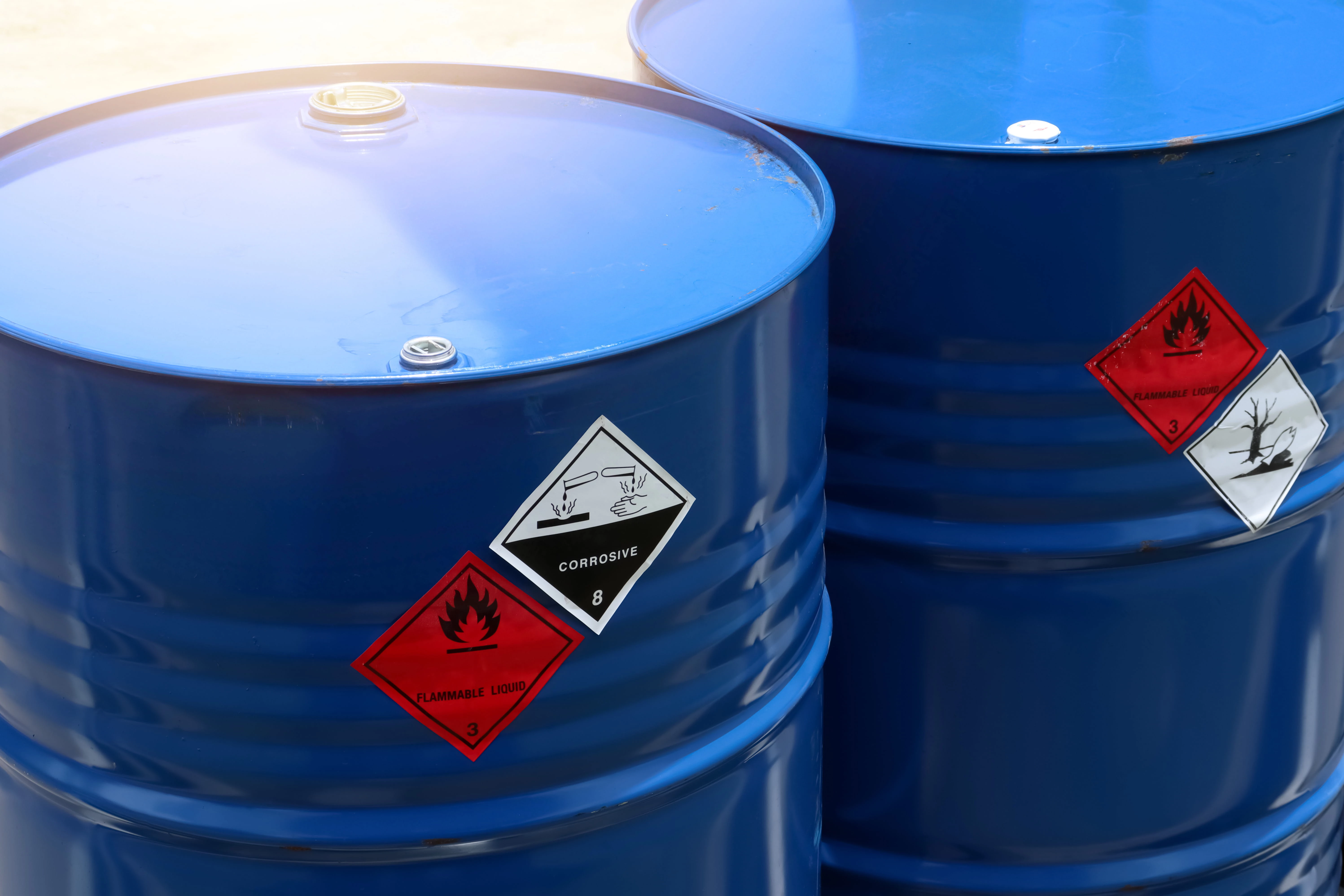
Definition of dangerous goods
Dangerous goods (also called hazardous materials or hazmat) are substances or products that can pose a risk to people, property, or the environment when transported. In other words: if a product could cause harm during transport, it may be classified as dangerous goods.
Identifying dangerous goods is important because it is the first step in transporting a product safely. Once a product is classified correctly, it can be handled in the right way, with the correct:
- Packaging
- Labelling and documentation
- Handling procedures
- Stowage
How are dangerous goods classified?
In the United States, the Department of Transportation (DOT) classifies dangerous goods based on a product’s specific chemical and physical properties. This classification determines how the goods must be packed, labelled, and transported.
How to check if your product is dangerous goods
A practical first step is to ask the manufacturer for a Safety Data Sheet (SDS). In the SDS, look for the section called “Transportation Information.” It often contains valuable details such as:
- Whether the product is regulated as dangerous goods
- Hazard class (if applicable)
- UN number and proper shipping name
- Key transport risks and restrictions
This information makes it easier to assess how the material should be transported safely.
Also read: What is air cargo? Meaning and benefits in global freight
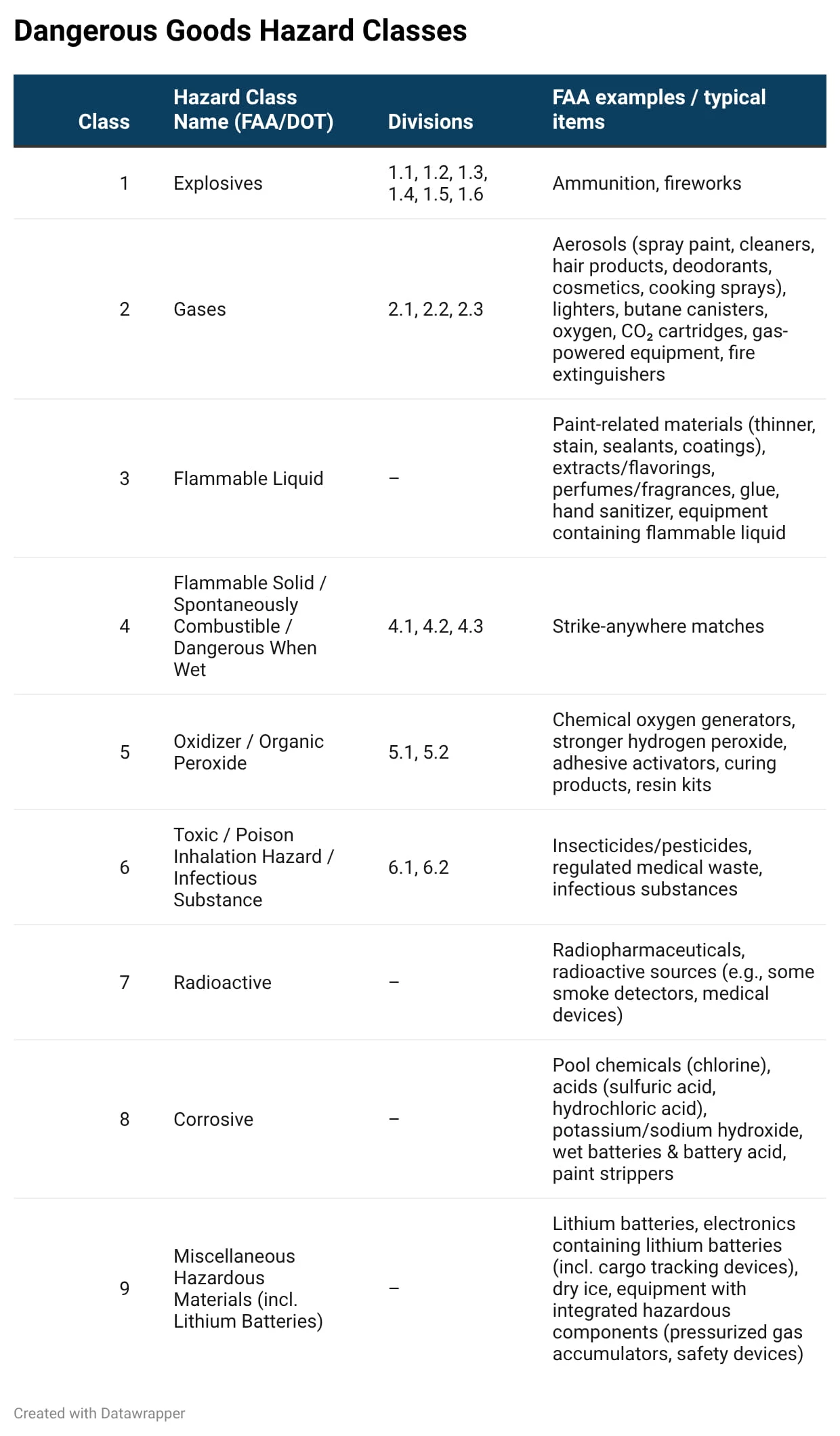
Dangerous goods hazard classes
To make dangerous goods easier to identify and handle safely, the U.S. Department of Transportation groups them into nine hazard classes. Each class describes a specific type of risk, for example:
- Class 3 covers flammable liquids
- Class 8 covers corrosive substances
Please note:
- This list below is not exhaustive and is provided for general awareness only
- You should always confirm the correct hazard classification of your product before shipping
Non dangerous goods examples
Examples of non-dangerous goods include:
- Dry goods/items: Office paper, cardboard, textiles, plastics, and metal waste.
- Substances: Certain non-toxic liquids, food items, and specific chemicals like magnesium sulfate, activated carbon, and sodium chloride.
- Equipment: General, non-battery-powered machinery or electronic components not deemed hazardous by IATA regulations.
What is required to transport dangerous goods?
There are regulations regarding training for the transport of dangerous goods both by road and by rail. These trainings are most commonly referred to as ADR driver training and ADR 1.3 training.
The driver training covers the basic training required for drivers to be allowed to transport dangerous goods. It can then be supplemented with specialized training for specific areas.
Also read: What is heavy haulage? – A definition of heavy haul trucking
Bertling are specialists in dangerous goods transport
Bertling provides project logistics and manages everything from dangerous goods to complex projects and transport chains. We plan and execute your special transports and offer reliable and cost-effective solutions. When you need to ship dangerous goods, we are ready to provide a tailored solution.
We also offer air freight, road transport, rail freight and sea freight – and we know what is required to ensure your cargo arrives safely and securely.